Peeling Is Bond Failure — A Different Problem Than Cracking
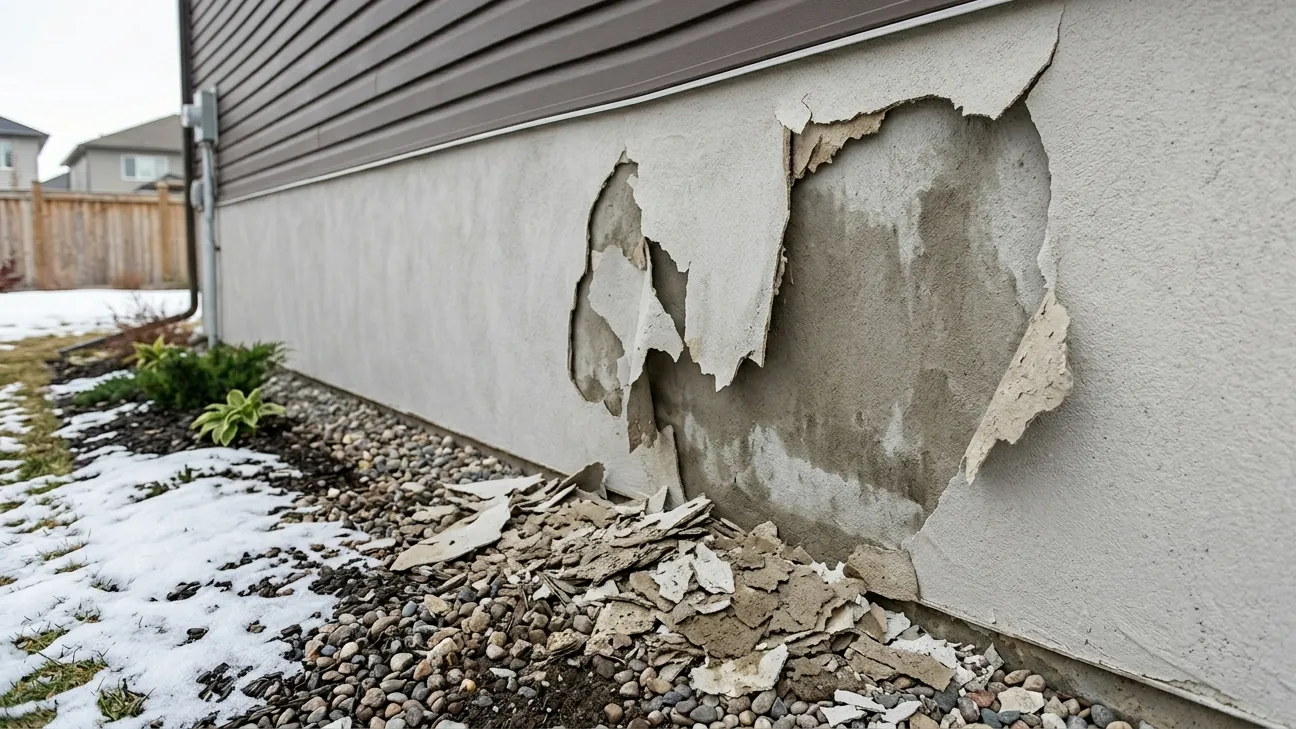
When parging cracks, it is still mostly doing its job. When it peels, the bond between the coating and the concrete has failed entirely — and moisture is no longer trying to get in, it is already there, pooling freely in the gap behind the wall on every rain event. This is the most damaging configuration a foundation can be in, and it warrants prompt action before the next Edmonton winter.
Why Peeling Parging Is More Urgent Than Cracked Parging
The distinction matters because it determines what repair approach is appropriate.
A crack in parging creates a gap that allows moisture to enter the coating layer during rain and snowmelt. During Edmonton's freeze-thaw cycles, that moisture freezes inside the crack and widens it incrementally. The parging is still bonded on either side — it is degrading, but it is still performing its protective function over most of the surface.
Peeling means the bond has already broken. There is a void between the coating and the concrete wall. Rain and snowmelt fill that void freely — not through a narrow crack, but across the entire delaminated area. When temperatures drop, that water freezes in direct contact with the structural concrete surface. The ice expansion has no parging to work against — it works directly on the foundation wall, causing surface spalling that is far harder and more expensive to remediate than crack damage.
The Portland Cement Association's freeze-thaw research is clear on this point: the freeze-thaw damage rate to concrete in direct contact with pooled water is significantly higher than to concrete protected by even a partially intact surface coating. Every winter with actively peeling parging accelerates the damage to the wall beneath.
The Three Root Causes of Peeling Parging in Edmonton
Identifying the root cause matters because it affects how the repair is scoped — particularly whether a drainage or moisture issue needs to be addressed before new parging is applied.
Cause 1: Original application without a bonding agent
Installation failureThis is the most common cause we see on Edmonton homes built in the 1990s and 2000s. Many applications from that era used only mechanical adhesion — the new parging was pressed against slightly dampened concrete and relied on suction and surface friction to hold. Without a chemical bonding agent, Edmonton's 50+ annual freeze-thaw transitions gradually work the coating away from the wall at the mechanical interface. The failure may take 8–15 years to become visible, but once it starts it progresses quickly.
Cause 2: Moisture infiltration behind an existing coating
Moisture-driven failureWater that enters through cracks, open joints at the grade line, or around window wells accumulates behind the parging over multiple seasons. As it freezes and expands each winter, it progressively weakens the bond across the delaminated area. The parging doesn't fail all at once — it blisters outward in sections, then begins to peel at the edges of those sections. You may notice efflorescence or damp patches nearby as a companion sign.
Cause 3: End-of-life coating degradation
Natural agingEven a well-applied, properly bonded parging system has a finite lifespan. Traditional cement parging typically lasts 10–15 years in Edmonton's climate before the bond begins to degrade through accumulated freeze-thaw stress and UV exposure. Acrylic-modified systems last 15–22 years. When the coating reaches end-of-life, peeling begins at corners and edges — the highest-stress points — and progressively moves toward the centre of each wall face. If your parging is over 12 years old and beginning to peel at corners and edges, this is the likely cause.
The Three Stages of Delamination
Visible peeling is rarely the first sign — it is usually mid-stage delamination that has become external. Here is the progression and what it looks like at each stage:
How to Diagnose the Full Extent of Delamination
Visible peeling almost always underestimates the true affected area. A full diagnosis takes 20 minutes and tells you whether you have an isolated repair or a full replacement situation.
Tap test — the primary tool: Walk every linear foot of foundation perimeter and tap firmly with a hammer or coin. Work outward from visible peeling areas in all directions. Mark every section that produces a hollow thud with chalk. When you have finished, step back and estimate what percentage of the total wall area you have marked. This percentage determines whether targeted repair or full replacement is the more cost-effective call.
Push test — catches early-stage delamination: Press your palm firmly against sections that tapped solid but are near visibly peeling areas. If the parging flexes slightly away from the wall under pressure — even a millimetre — the bond has failed even though the material hasn't started to visibly peel yet. Treat flexing sections the same as hollow sections.
Inspect the concrete behind fallen sections: Where parging has already detached, look at the back of the fallen piece and the exposed wall surface. If the back of the piece is clean and the exposed wall shows mostly clean concrete, the failure was at the bond interface — a standard repair scenario. If the back of the piece carries chunks of concrete attached to it, or the exposed wall is pitted and crumbling, the concrete itself has been damaged and remediation beyond simple recoating will be needed.
Why patching over or next to peeling parging never works: New parging applied over failing old parging bonds to the old coating — not to the concrete. The old coating is actively separating from the wall, and when it continues to do so, the new material separates with it. There is no amount of material or bonding agent that can lock new parging to a substrate that is already in motion. Any contractor who proposes applying material over peeling sections without first removing all delaminated material is describing work that will fail within one Edmonton winter. The only correct repair starts with full removal.
What Correct Repair of Peeling Parging Involves
For anyone evaluating contractor quotes, here is what a proper repair of peeling or delaminated parging must include — and what to push back on if it is missing:
- Complete removal of all delaminated material — including sections that tap hollow but haven't visibly peeled. Leaving hollow sections adjacent to repaired areas guarantees propagation of the failure into the new work.
- Inspection and treatment of the exposed concrete — any efflorescence is cleaned, any soft or crumbling material is ground back, any active moisture source (downspout, grade, window well) is identified and flagged for correction before recoating.
- Professional bonding agent applied to reach correct tack — this is the step that prevents re-delamination. Not a mist of water. Not PVA glue. A cementitious bonding agent formulated for Alberta's temperature range, applied and allowed to reach the manufacturer-specified tack before new material is placed.
- Parging mix matched to the substrate and climate — an acrylic-modified system for most Edmonton applications, or a traditional sand-cement mix where texture matching to adjacent original parging is the priority.
- Curing conditions monitored — no work placed within 72 hours of forecast temperatures below 5°C.
Our full parging repair service page covers this process in detail, including what each step involves and why skipping any of them leads to early failure.
Repair or Full Replacement?
The tap and push test results guide this decision directly. If delaminated sections cover more than 25% of the total wall area, full replacement is almost always more cost-effective over a 10-year horizon — the labour cost of removing and recoating isolated sections scattered across the entire perimeter approaches the cost of a full redo, without the uniform result or the long warranty a full replacement provides.
Below 25%, targeted removal and repair of the delaminated sections is a legitimate long-term fix — provided the surrounding parging is genuinely sound and the root cause has been addressed. Our repair vs. replacement guide walks through the full decision framework, including the cost comparison over a 10-year window.
Timing matters more with peeling than with cracking: Every winter with actively peeling parging means another round of ice expansion directly on the exposed concrete surface — widening the area that needs remediation and increasing the cost of the eventual repair. The cost of parging repairs scales with damage progression in a way that makes acting in the current season consistently cheaper than waiting for the next.
"We had a contractor come out who said he could just apply new parging over the peeling sections — said it would be cheaper and just as good. AxisLayer told us exactly why that wouldn't work and showed us with the tap test that three times as much of the wall had delaminated as we could see. We did the full removal and reapplication. Two winters in, the work is holding perfectly. The other quote would have been money wasted."
— Homeowner in Sherwood Park, 2023 projectWhat to Do Next
If your parging is visibly peeling or you have found hollow sections through the tap test, the next step depends on the extent of delamination:
- Isolated peeling on less than 25% of the wall: Targeted professional repair this season — full removal of delaminated sections, bonding agent, reapplication.
- Widespread delamination across multiple walls: Full replacement assessment — compare the cost of sectional repair vs. full perimeter redo before committing.
- Active moisture staining near or behind peeling sections: Check drainage before booking repair — our moisture damage guide helps identify the source.
- Not sure how much has delaminated: Our parging assessment guide walks through the tap test and 25% rule in detail.
Frequently Asked Questions
The three root causes in Edmonton are: original application without a bonding agent (common in homes built before 2010), moisture infiltration building up behind the coating through cracks or grade drainage issues, and end-of-life natural bond degradation in older coatings. The visible peeling almost always represents a larger area of hidden delamination that a tap test will reveal.
No — not in any way that will last through an Edmonton winter. New material applied over peeling old parging bonds to the failing coating, not to the concrete. When the old coating continues to separate, the patch separates with it. The only correct repair starts with full removal of all delaminated material.
Yes. A crack allows moisture to enter the coating layer. Peeling means the bond has already failed — moisture pools freely in the gap behind the wall on every rain event and freezes in direct contact with the structural concrete. This causes spalling damage to the foundation wall itself, not just to the sacrificial coating.
Tap the entire perimeter with a hammer — hollow thuds reveal delamination beyond the visibly peeling areas. Follow up with the push test: press your palm firmly against surface sections near peeling areas. Any flex away from the wall indicates bond failure even before visible peeling begins. The proportion of hollow + flexing sections determines whether targeted repair or full replacement is the right call.
Isolated peeling on small sections runs $1,000–$3,000 for removal and reapplication. Widespread delamination across multiple walls typically requires full-perimeter replacement at $5,000–$10,000+. See the full breakdown in our cost guide.
As soon as possible — ideally in the same season you notice it. Every winter with actively peeling parging causes more concrete surface damage, widening the remediation scope and increasing cost. Repairs require temperatures above 5°C, so the Edmonton window is May through early October.
Last reviewed: April 2026 by the AxisLayer Exteriors team, Edmonton, Alberta.
Fix Peeling Foundation Parging in Edmonton
Send us a photo of each wall and describe what you are seeing — we will tell you the likely cause, estimate the scope, and give you a clear quote. No obligation.
Request a Free Assessment