Stucco Installation & Repair in Edmonton
Stucco is one of the most proven exterior wall finishes used on Edmonton homes — durable, versatile, and well-suited to Alberta's climate when installed correctly. We handle new stucco installation, crack and damage repair, and full exterior resurfacing for residential homeowners across Edmonton and surrounding areas.
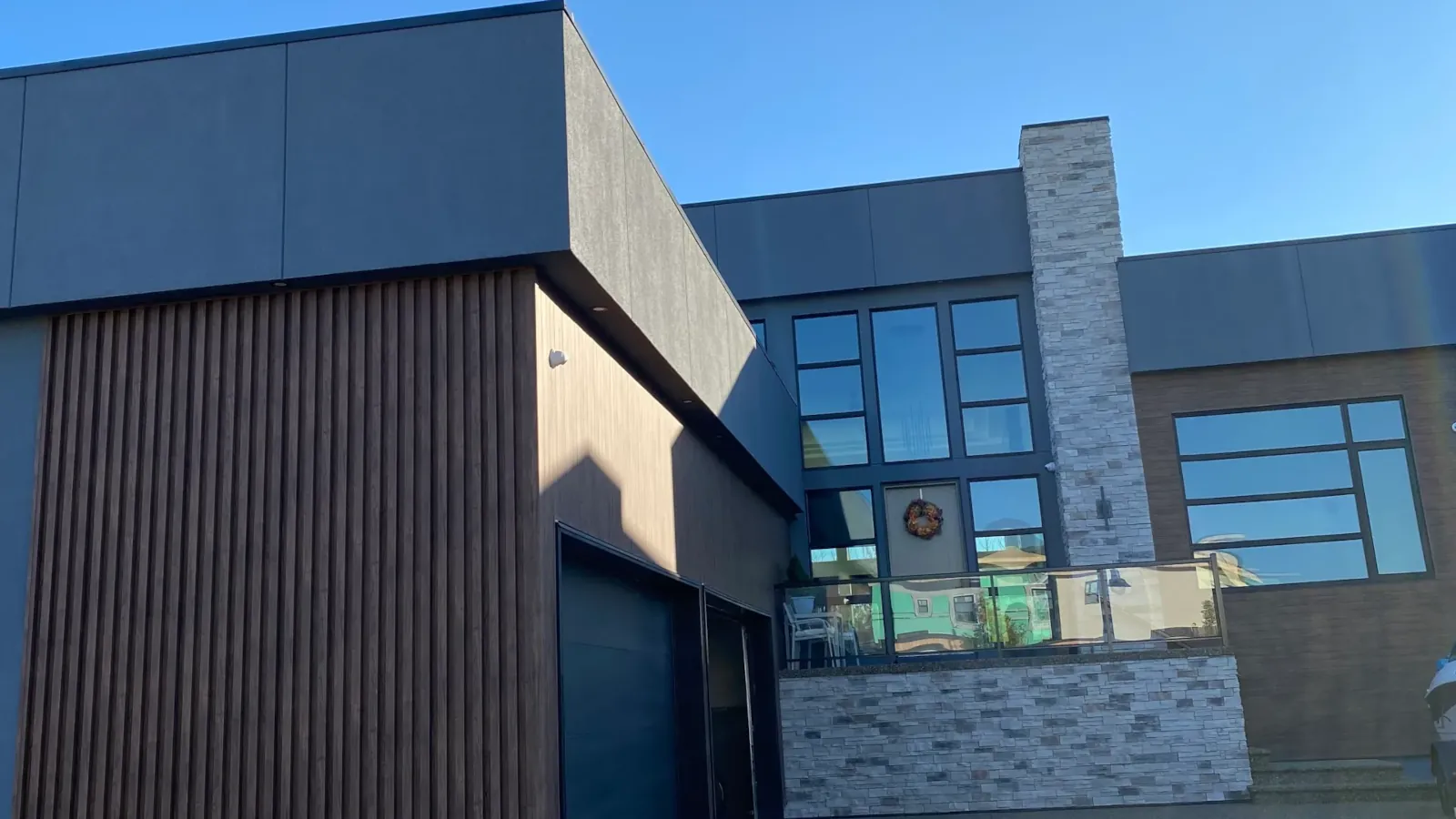
What Is Stucco and Why Is It Used on Edmonton Homes?
Stucco is a cement-based exterior finish that has been used on homes for generations. It is applied in layers over a wall assembly to create a hard, seamless surface that protects the structure from weather, moisture, and physical wear. In Edmonton, stucco is particularly common because it handles Alberta's temperature swings reasonably well, is relatively low-maintenance once properly installed, and can be finished in a wide range of textures and colours to suit different architectural styles.
It is used on both new construction and existing homes, and it remains one of the most cost-effective ways to finish or refinish an exterior wall surface for the long term.
Traditional Stucco vs. Synthetic Stucco — What's the Difference?
There are two main stucco systems used on Edmonton homes, and they behave quite differently.
Traditional three-coat stucco is a cement, sand, and lime mixture applied in three layers over metal lath — a scratch coat, a brown coat, and a finish coat. It is very hard and extremely durable, with a lifespan of 50 years or more when properly installed. The trade-off is that it is rigid, which means it can crack when the wall shifts slightly or when temperature changes cause expansion and contraction.
Synthetic stucco uses acrylic polymers in the finish coat, which makes it more flexible and less prone to cracking than traditional cement stucco. It is also lighter, available in a broader range of textures and colours, and faster to apply. Typical lifespan is 20 to 30 years. Synthetic stucco is a popular choice for homeowners who want more colour and texture options, or who have had recurring cracking issues with a previous cement-based finish.
Both systems are appropriate for Edmonton's climate. The right choice depends on your wall assembly, budget, and appearance goals — something we can walk through when you reach out for a quote.
New Stucco Installation in Edmonton
For new construction or homes that need a full exterior reclad, stucco installation starts with the wall assembly — making sure the substrate, moisture barrier, and lath are all correctly prepared before any stucco is applied. Shortcuts at this stage are the most common reason stucco fails prematurely, particularly in Edmonton's climate where freeze-thaw cycles stress every layer of the wall system.
The installation process on a new or stripped wall follows these stages:
- Wall inspection and substrate preparation. The existing wall surface or new sheathing is assessed to confirm it is sound, dry, and suitable for stucco adhesion.
- Moisture barrier and lath installation. A weather-resistant barrier is applied, followed by metal lath that provides the mechanical key for the stucco to grip.
- Scratch coat application. The first stucco layer is applied and scratched to create a textured surface for the next coat to bond to. This coat must cure properly before proceeding.
- Brown coat application. The second coat levels the wall surface and adds structural thickness. Curing time between coats is critical and cannot be rushed.
- Finish coat and texture. The final coat is applied in the selected texture — sand, dash, smooth, or another finish — and colour-matched to specification.
- Detailing at openings. Windows, doors, and utility penetrations are carefully sealed and detailed to prevent moisture from getting behind the stucco — one of the most important steps in a long-lasting installation.
Stucco Repair and Resurfacing in Edmonton
Not every stucco problem requires a full replacement. Isolated cracks, chips, delamination, and impact damage can often be repaired without touching the rest of the wall. We assess the damage first to determine whether repair or resurfacing is the right approach.
Repair is appropriate when damage is localized — a section of cracked or hollow stucco, a patch that has separated from the wall, or isolated areas of surface deterioration. The damaged material is removed, the underlying surface is prepared, and new stucco is applied and matched as closely as possible to the existing finish.
Resurfacing makes more sense when the existing stucco is widely cracked, heavily weathered, or simply outdated in appearance. Rather than chasing cracks one at a time, the entire surface is refinished with a new finish coat — sometimes over the existing base coats if they are sound, or over a full new system if they are not. Resurfacing is often the more cost-effective long-term solution when a wall has widespread but superficial deterioration.
If you're not sure which applies to your home, take a look at some of our completed stucco and exterior projects to get a sense of what repair and resurfacing outcomes look like in practice.
Why Proper Stucco Installation Matters in Edmonton's Climate
Edmonton's climate is harder on exterior finishes than most Canadian cities. Winters regularly reach -30°C, summers push past +30°C, and the spring and fall shoulder seasons bring repeated freeze-thaw cycles that stress every layer of an exterior wall. Stucco handles this well when installed correctly — but it also fails in predictable ways when it is not.
The most common failure points on Edmonton stucco homes are poorly sealed window and door openings, inadequate curing time between coats, and missing or improperly installed control joints that allow cracks to form and propagate. Moisture that gets behind stucco through any of these entry points can cause significant damage over several winters — not just to the stucco itself, but to the wall sheathing and framing behind it.
According to CMHC's building science guidance, moisture management is the single most important factor in the long-term performance of any exterior cladding system in Canada — and stucco is no exception.
Signs Your Edmonton Home's Stucco Needs Attention
Most stucco problems are visible before they become serious. Watch for:
- Cracks wider than a hairline, especially around windows and doors
- Sections of stucco that sound hollow when tapped
- Staining or discolouration that suggests moisture is getting behind the finish
- Bubbling or blistering on the surface
- Chunks or sections that have separated from the wall
- A finish that is heavily faded, chalking, or simply outdated
Hairline cracks that appear uniformly across the surface are usually the result of normal curing shrinkage and are not necessarily a concern. Cracks that are wider, growing, or concentrated near penetrations are worth having assessed.
Stucco vs. EIFS — Which Is Right for Your Home?
Homeowners comparing stucco to EIFS are usually weighing appearance, performance, and cost. Stucco is the simpler and more straightforward of the two systems — it has no insulation layer, requires less complex detailing, and is generally less expensive for a comparable wall area. If energy efficiency is not a primary driver and the existing wall insulation is adequate, stucco is often the right answer.
EIFS makes more sense when improving thermal performance is a key goal, or when a homeowner has had recurring cracking issues with previous stucco and wants a more flexible system. Both are good options — the choice depends on your specific priorities.
For foundation walls, neither stucco nor EIFS is typically the right approach — foundation parging is the correct solution for exposed concrete below grade.
Common Questions About Stucco in Edmonton
How long does stucco last in Edmonton?
A properly installed three-coat system can last 50 years or more. Synthetic stucco typically lasts 20 to 30 years. In both cases, longevity depends heavily on installation quality — particularly how well the system is detailed at windows, doors, and other wall penetrations where moisture entry is most likely.
Can stucco be repaired, or does it need to be fully replaced?
Isolated cracks, chips, and surface delamination can usually be repaired without touching the rest of the wall. If damage is widespread, or if there is moisture behind the stucco, a full resurfacing or replacement is typically the more cost-effective long-term solution. We assess the wall condition before recommending either approach.
Why does stucco crack in Edmonton?
The most common causes are freeze-thaw cycling, structural settlement, and normal shrinkage during curing. Small hairline cracks are not always a serious problem. Wider cracks, cracks that follow a pattern, or cracks near windows and doors are worth having assessed, as they can allow moisture to get behind the finish.
What is the difference between traditional and synthetic stucco?
Traditional stucco is a cement, sand, and lime system applied in three coats — very hard and long-lasting, but rigid and prone to cracking under movement. Synthetic stucco uses acrylic polymers to create a more flexible finish with a broader range of textures and colours. Both are used on Edmonton homes and both perform well when correctly installed.
How is stucco different from EIFS?
Traditional stucco is applied directly to the wall and has no insulating value. EIFS includes a rigid foam insulation layer under the finish coat, which improves thermal performance significantly. Stucco is simpler and generally less expensive; EIFS is a better fit when energy efficiency is a priority.
Get a Quote for Stucco Installation or Repair in Edmonton
Whether you need a new stucco finish, targeted crack repair, or a full exterior resurfacing — we'll take a look at your home and give you a straight assessment of what makes sense. Reach out through our contact page and we'll get back to you promptly.
Request a Quote