EIFS Installation in Edmonton
EIFS — Exterior Insulation and Finish Systems — is one of the most effective ways to insulate and protect an Edmonton home's exterior walls. It reduces heat loss, handles freeze-thaw stress better than traditional finishes, and gives your home a clean, modern appearance that lasts for decades.
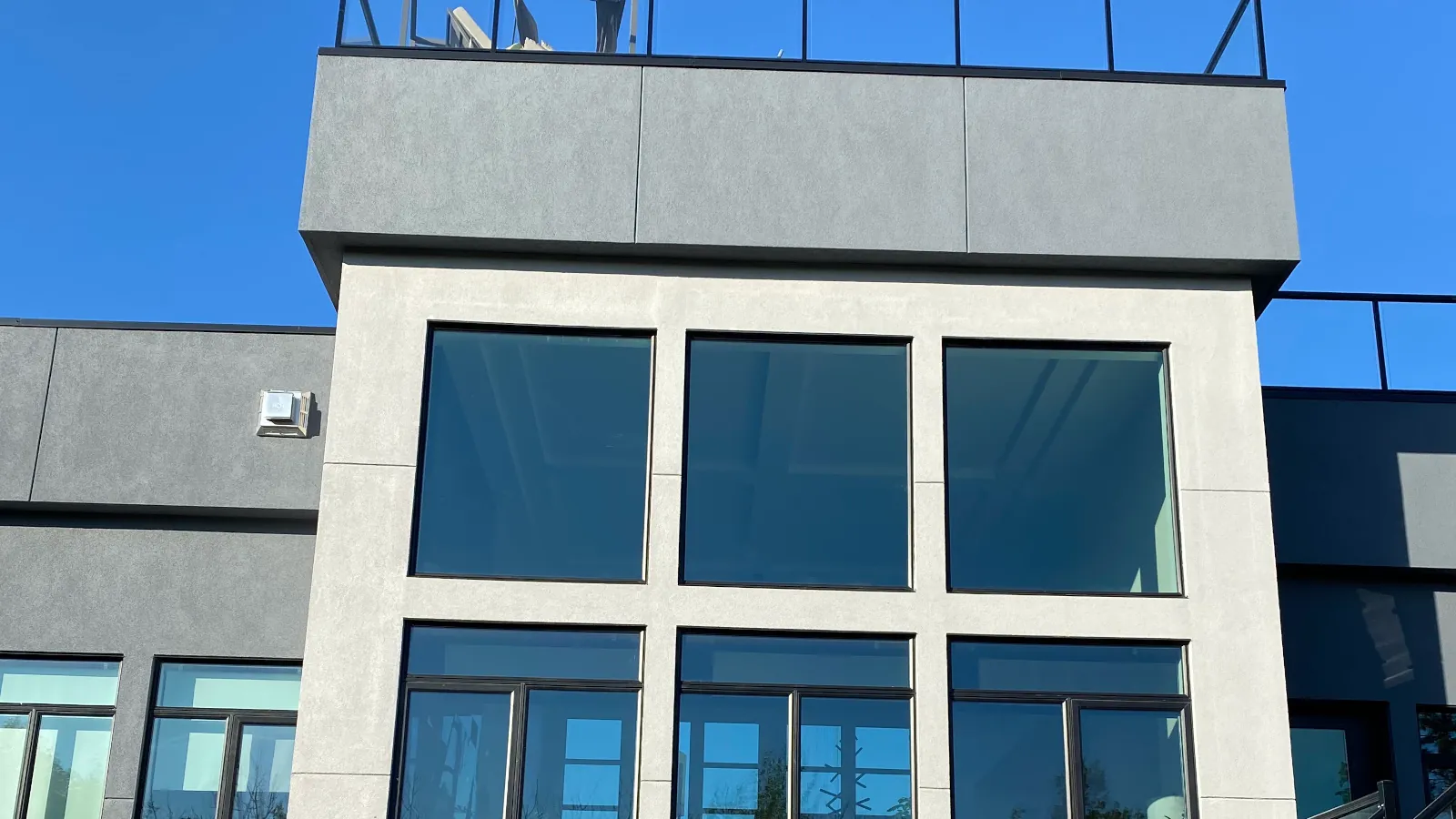
What Is EIFS and How Does It Work?
EIFS is a multi-layer exterior wall system that combines insulation and a finished surface into a single integrated assembly. Unlike traditional stucco — which is applied directly onto the wall sheathing — EIFS starts with a layer of rigid foam insulation board that is fastened to the exterior wall. Over that insulation, a fibreglass reinforcing mesh is embedded in a base coat, and then a textured finish coat is applied on top.
The result is an exterior wall that is better insulated, more resistant to cracking, and significantly lighter than cement-based alternatives. For Edmonton homeowners, that added insulation layer is what makes EIFS worth serious consideration — especially on older homes where heat loss through exterior walls is a real problem every winter.
EIFS vs. Traditional Stucco: What's the Difference?
This is the question most Edmonton homeowners ask first, and it's a fair one — both systems produce a similar finished look on the outside. The key difference is what's underneath.
Traditional stucco is a hard, rigid cement-based product applied in layers directly to the wall structure. It's durable and time-tested, but it has no insulating value of its own, and because it's rigid, it can crack when a building shifts or when Alberta's extreme temperature swings cause the wall to expand and contract.
EIFS includes that foam insulation layer, which serves two purposes: it adds meaningful thermal resistance, and it acts as a buffer that absorbs the movement that would otherwise crack a rigid finish. This is why EIFS tends to perform particularly well in Edmonton's climate, where a wall can go from -30°C in January to +30°C in July.
If energy efficiency is a priority, or if your home has had recurring cracking issues with a previous stucco or parging finish, EIFS is often the better long-term solution.
Why Edmonton Homes Benefit From EIFS
Edmonton's climate is tough on exterior finishes. Winters are long, temperatures are extreme, and the freeze-thaw cycles that happen in spring and fall put constant stress on exterior walls. Moisture gets into small cracks, freezes, expands, and makes those cracks larger — a cycle that eventually causes visible damage and, if left unchecked, moisture intrusion into the wall assembly.
EIFS addresses this in a few ways. The continuous insulation layer keeps the wall surface warmer, which reduces the frequency and severity of freeze-thaw damage at the finish. The flexible nature of the finish coat handles minor movement without cracking. And a properly installed EIFS system includes drainage details and sealants at penetrations that prevent moisture from getting behind the system in the first place.
According to the National Research Council of Canada, continuous insulation on exterior walls is one of the most effective ways to improve a building envelope's thermal performance — and EIFS is one of the most practical ways to achieve it on an existing or new home.
New Builds and Retrofit Projects — Both Are a Good Fit
EIFS works well in two very different situations, and we install it for both.
On new construction, EIFS is planned from the start as the exterior wall finish. It integrates cleanly with the building envelope design and is one of the most efficient ways to meet or exceed Alberta's energy code requirements for exterior insulation.
On existing homes, EIFS is a retrofit upgrade — installed over the existing exterior wall surface after it has been assessed for structural soundness and moisture issues. This is a common project for Edmonton homeowners who want to improve their home's energy performance without a full exterior rebuild. It's also a practical option when an existing stucco or cladding finish has reached the end of its life and needs to be replaced anyway.
Before any retrofit installation, we assess the existing wall condition to confirm there are no moisture or structural issues that need to be resolved first. Installing EIFS over a compromised wall will eventually lead to problems — so this step is not skipped.
You can see how EIFS integrates with other exterior finishes in our custom EIFS, stone, and wood exterior project — a good example of what a complete exterior transformation looks like in practice.
How EIFS Installation Works
Every EIFS project follows the same fundamental process, though the specifics vary based on whether it's a new build or retrofit and the size and condition of the walls.
- Wall assessment and preparation. We inspect the existing wall surface for moisture, structural issues, and adhesion conditions. On retrofit projects, any problem areas are addressed before EIFS is applied.
- Insulation board installation. Rigid foam insulation boards are adhered and/or mechanically fastened to the wall surface. Board thickness is selected based on the insulation level required.
- Base coat and mesh application. A polymer-modified base coat is applied over the insulation, and fibreglass reinforcing mesh is embedded into it while it is wet. This layer provides the structural reinforcement for the finished system.
- Detailing at openings and penetrations. Windows, doors, utility penetrations, and transitions are sealed and detailed to prevent moisture intrusion — this is one of the most important parts of a quality EIFS installation.
- Finish coat application. The textured finish coat is applied in the selected texture and colour. This is the visible surface of the completed system.
Finish Textures and Appearance Options
The outer finish coat is where you have the most choice. EIFS finish coats are available in a wide range of textures — from fine sand and medium coarse to swirl patterns and smooth finishes — and come in an extensive range of colours. We work with the brands available through Edmonton suppliers, so product selection is not a limiting factor.
Finish texture is selected during the planning phase based on your home's architectural style, neighbourhood context, and personal preference. If you're not sure what texture fits your home, we can walk you through options that work well in Edmonton's residential neighbourhoods.
Signs Your Edmonton Home Might Be a Good Candidate for EIFS
EIFS is worth considering if any of the following apply to your home:
- Your heating bills feel disproportionately high for your home's size
- Your current exterior finish — stucco, wood, or other cladding — is aging, cracking, or failing
- You've had recurring cracking or moisture issues with a previous stucco finish
- You're building new and want to exceed minimum insulation requirements
- You want to modernize your home's exterior appearance and improve performance at the same time
If you're unsure whether EIFS or traditional stucco is the right fit for your project, that's something we can talk through when you reach out for a quote. Both are good systems — the right choice depends on your specific priorities and what your existing walls look like.
For foundation walls specifically, foundation parging is typically the right solution rather than EIFS.
Common Questions About EIFS in Edmonton
What is the difference between EIFS and stucco?
Traditional stucco is cement-based and applied directly to the wall surface with no insulation value. EIFS includes a rigid foam insulation board under the finish, which improves thermal performance and makes the system more flexible and crack-resistant. They look similar from the street but perform very differently.
Can EIFS be installed on an existing Edmonton home?
Yes. Retrofit EIFS installation is common and works well on most existing homes, provided the underlying wall is in sound condition. We assess the wall before any installation to confirm it's a suitable candidate.
How long does EIFS last in Edmonton's climate?
A properly installed EIFS system typically lasts 30 to 50 years. Edmonton's freeze-thaw cycles are hard on rigid finishes, but EIFS handles thermal movement better than traditional stucco because the insulation layer absorbs the stress that would otherwise cause cracking.
Does EIFS actually reduce heating costs?
Yes, measurably. EIFS adds continuous insulation across the full wall surface, which eliminates the thermal bridging that occurs at studs in standard batt-insulated walls. For Edmonton homeowners with long heating seasons, this can make a noticeable difference. CMHC's building science resources explain how continuous exterior insulation reduces heat loss in cold climates.
What finish textures are available with EIFS?
EIFS finish coats are available in many textures including fine sand, medium coarse, swirl, and smooth. Colour selection is extensive. Texture and colour are chosen during the planning phase and have no impact on the system's performance — only its appearance.
Get a Quote for EIFS Installation in Edmonton
Whether you're building new, upgrading an aging exterior, or comparing EIFS to other options — we're happy to take a look at your project and give you a straight answer on what makes sense. Reach out through our contact page and we'll get back to you promptly.
Request a Quote