A Straight Answer for Edmonton Homeowners
"Do I actually need this, or is it just a cosmetic upgrade?" It is the right question to ask before spending money on your foundation. The honest answer is: it depends on what you are seeing. Some situations are urgent. Some can wait a season. Some are purely visual. This guide tells you which is which.
The 6 Situations — and What Each One Means for You
Work through these six scenarios and find the one that matches your foundation. Each one carries a different urgency level and a different recommended response.
1. Your foundation is bare concrete — never been parging applied
Act before next winterWhether you have a new build handed over without a parging coat, or an older home where the original coating was never applied, bare concrete above the grade line is absorbing moisture with every rain and snowmelt. Edmonton's 50+ annual freeze-thaw cycles mean that water will begin fracturing the surface from within — usually visibly within two to three winters without protection.
2. You have active spalling — concrete chips or flakes falling off
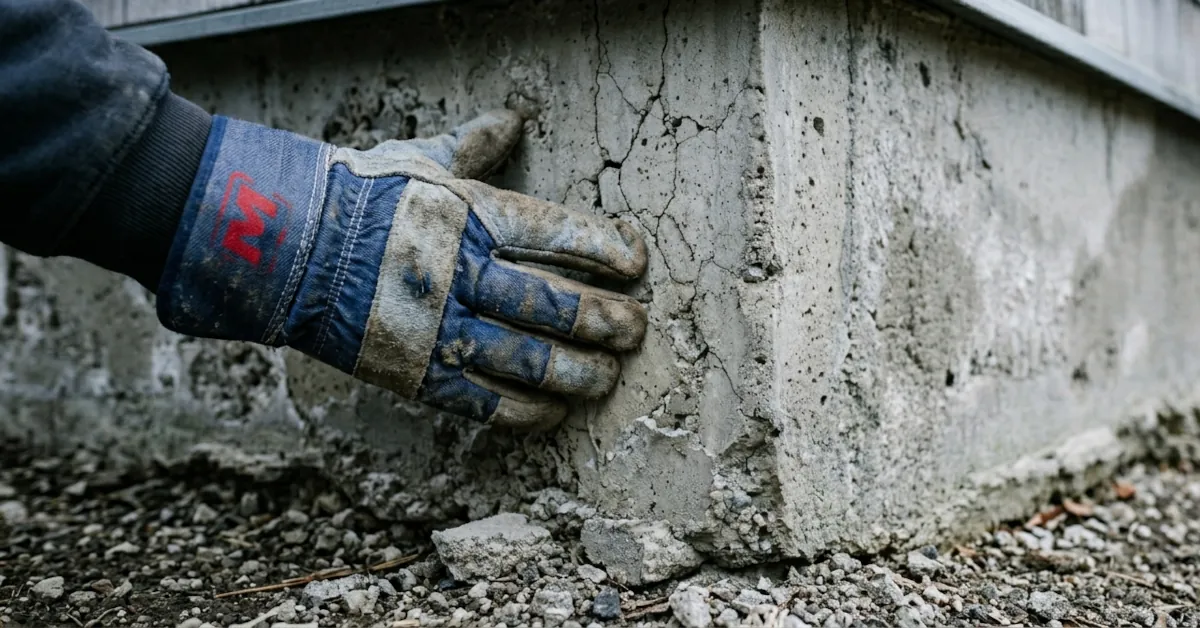
Address this seasonSpalling means freeze-thaw damage is already underway. Structural concrete is being physically removed by ice expansion inside the wall's pore structure. Each winter deepens the damage and widens the affected area. If you can see chips, flakes, or pits across sections of your foundation, this is beyond cosmetic.
3. Your existing parging is cracking
Repair before winterNot all parging cracks are equal. Fine hairline cracks that appeared after a major temperature swing and haven't widened are usually low concern — the coating is still doing its job. Cracks that are widening, cracks wider than 3mm, or cracks accompanied by hollow sections behind them mean moisture is now reaching the concrete and the protective function is compromised.
4. Your parging is peeling or bubbling off the wall
Address this seasonPeeling or delaminating parging has lost its bond to the concrete beneath. Water is pooling in the gap between the coating and the wall — the worst possible position, because that water has nowhere to drain and freezes in direct contact with both surfaces every winter. This configuration accelerates damage to the structural concrete underneath far faster than bare concrete would.
5. You have moisture staining, efflorescence, or damp patches
Monitor closely — act this seasonWhite powdery deposits or dark patches that stay wet long after rain are signs that moisture is actively moving through your concrete. If you have parging and it is showing these signs, the coating has either cracked or thinned enough that water penetration is now occurring. If the foundation is bare, these signs indicate the freeze-thaw damage process has already started.
6. Your foundation looks rough, stained, or outdated — but is otherwise intact
Cosmetic — timing is your choiceIf your foundation has solid, well-adhered parging with no hollow sections, no active cracking, and no moisture staining — it is just not pretty — this is a cosmetic decision. Mismatched patch colours, general grey weathering, or an older textured finish that looks dated all fall here.
How to Do a 15-Minute Self-Inspection Before Calling Anyone
You can answer most of these questions yourself with a walk around the house and one tool: a regular hammer or a coin. Here is what to check:
Visual scan from 2 metres: Walk the full perimeter and note any chips, flakes, dark damp patches, white deposits, or sections where the surface texture looks different from the rest. Note where downspouts discharge and whether that area shows more wear.
Tap test — the most important step: Tap the parging surface firmly with a hammer or coin every 30–40cm across the entire wall. A solid sound means good bond. A hollow thud means the parging has delaminated from the concrete beneath it. Mark hollow sections with chalk and estimate what percentage of the wall is affected.
Press test on suspect areas: Press firmly with your thumb on any areas that look soft, crumbly, or darker than surrounding sections. Material that gives way or crumbles means active spalling — the concrete itself is deteriorating, not just the coating.
Crack width check: For any cracks you find, insert a credit card edge into the widest point. If it goes in more than 2–3mm, the crack is wide enough to allow meaningful water penetration and should be assessed before winter.
Check 24 hours after rain: Revisit the foundation the day after a rain. Sections that are still visibly darker and wet while the rest of the wall has dried are actively absorbing and holding water — a reliable indicator of compromised or absent protection.
Rule of thumb: If your tap test finds hollow sections covering more than 25–30% of the wall, full replacement is almost always more cost-effective than patching. New material cannot bond reliably over delaminated old material, and the effort of patching dozens of spots approaches the cost of doing it properly once.
When Is the Best Time to Have Parging Done in Edmonton?
Parging requires temperatures above 5°C for proper curing — both at application and for the 48–72 hours afterward. Here is how the seasons break down for Edmonton parging work:
"I was convinced I just needed a patch on one corner. AxisLayer did the tap test around the whole house and found hollow sections on three walls I hadn't even noticed. They showed me exactly what they were hearing — I could hear the difference myself. Ended up doing the full perimeter and I'm glad we did it properly instead of wasting money on patches that would have failed anyway."
— Homeowner in Sherwood Park, 2024 projectWhat Does Parging Cost for an Edmonton Foundation?
The cost range is wide because it depends heavily on surface condition. A new build with clean concrete and no prep required is the lowest-cost version of this job. A foundation with active spalling, delaminated old parging to remove, and deep pitting to fill is the most expensive version.
- Small targeted repairs (isolated cracks or sections): $500–$2,500
- Full-perimeter parging on a standard home — good surface condition: $4,000–$7,000
- Full-perimeter with surface remediation required: $7,000–$12,000+
Our 2026 Edmonton parging cost guide breaks these down by finish type, home size, and project scope.
Frequently Asked Questions
Both — but the structural role is primary. Parging is a sacrificial moisture barrier that prevents water from entering porous concrete and causing freeze-thaw spalling. In Edmonton's climate, skipping it leads to progressive deterioration that compounds every winter. The visual improvement is a bonus.
Not without consequence. Bare concrete absorbs moisture from rain and snowmelt. In Edmonton, that moisture freezes inside the pores each winter and expands by roughly 9%, fracturing the surface. Over 50+ freeze-thaw cycles a year, the damage accumulates quickly.
Tap the surface with a hammer — a hollow thud means delamination. If hollow sections cover more than 25–30% of the wall, a full redo is typically more cost-effective than patching. Our repair vs. replacement guide walks through the full decision.
A professional assessment covers: tapping for hollow sections, checking crack widths and patterns, assessing moisture staining and efflorescence, reviewing grade line drainage, and testing coating adhesion. It takes around 20–30 minutes on a typical Edmonton home.
Targeted repairs run $500–$2,500. Full-perimeter parging on a typical home is $4,000–$7,000 in good surface condition, and up to $12,000+ if significant prep work is needed. See the full breakdown in our cost guide.
May through September is ideal. Parging requires temperatures above 5°C during application and the following 48–72 hours. Most reputable Edmonton contractors are fully booked by mid-July, so booking in spring is advisable.
Last reviewed: April 2026 by the AxisLayer Exteriors team, Edmonton, Alberta.
Still Not Sure What Your Foundation Needs?
Send us a photo of the area you are concerned about and we will give you an honest assessment — repair, replacement, or nothing yet. No obligation.
Get a Free Assessment