Is Your Foundation Exposed and Vulnerable to Edmonton's Climate?
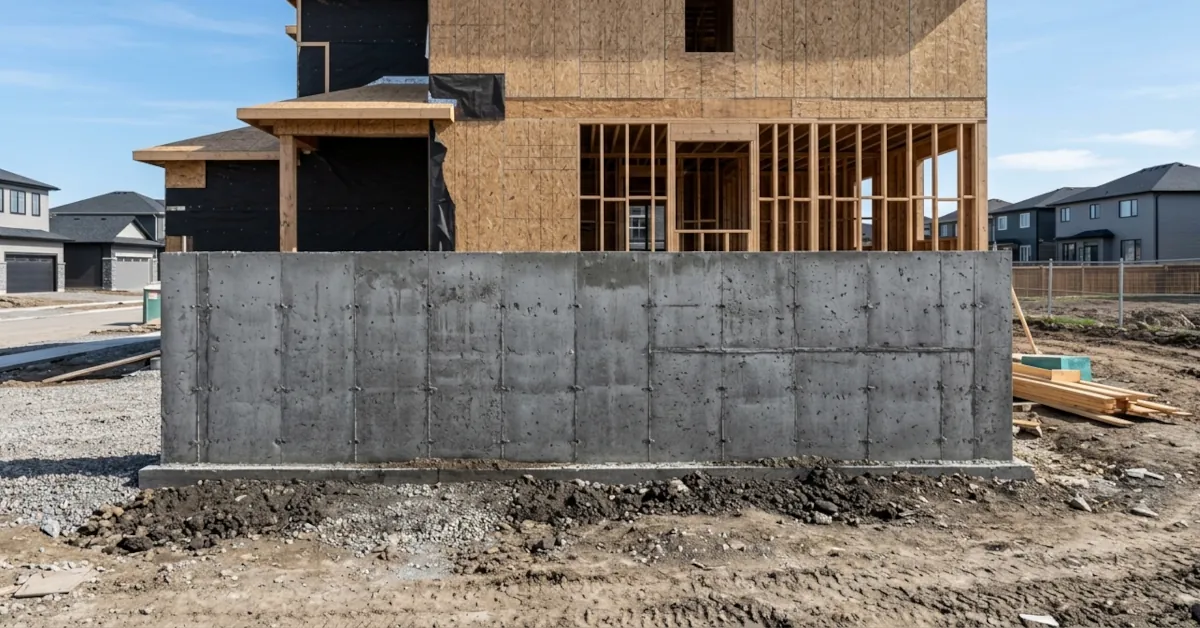
Whether you have a brand-new home that was handed over with bare concrete above the grade line, or an older property where the original parging has weathered away, exposed concrete is a liability. In Edmonton's freeze-thaw climate, leaving it unfinished isn't a cosmetic choice — it's a structural risk that compounds every winter.
Why Bare Concrete Is Not Enough on Its Own
Concrete is one of the most durable structural materials on earth — but it is not waterproof. Under a microscope, concrete is full of tiny connected pores, and those pores act exactly like a sponge against rain, snowmelt, and ground moisture.
In Edmonton, this porosity creates two compounding problems. First, water absorbs into the wall. Second, when temperatures drop — as they do repeatedly throughout an Alberta winter — that absorbed water freezes and expands by approximately 9%. That expansion happens inside the concrete itself, generating internal pressure that chips, cracks, and eventually fragments the surface. This process is called spalling, and once it begins it accelerates with each freeze-thaw cycle.
Salt makes it worse. Road salt tracked in by vehicles, or applied near walkways and driveways, migrates into exposed concrete and chemically degrades the cement matrix from within. The result is a foundation that looks progressively worse each spring and becomes increasingly expensive to restore.
Edmonton-specific note: The city averages over 50 freeze-thaw transitions per year — significantly more than milder Canadian cities. Each transition is a stress cycle on unprotected concrete. Foundations that look fine in year one often show visible spalling by year three without a protective coating.
Two Types of Exposed Foundation — Two Different Approaches
New construction with unfinished concrete
Many Edmonton builders hand over homes with the above-grade foundation still bare. This is standard in the industry — parging is often treated as a finishing item that homeowners add after possession. The good news: fresh concrete provides the cleanest possible bonding surface for parging. There is no old coating to remove, no efflorescence to treat, and no spalling to remediate. Parging a new build early is the fastest, most cost-effective version of this job, and it locks in protection before the first winter does any damage.
Older homes where the original parging has failed
On an aging home, exposed concrete usually means the original parging coating has cracked, peeled off, or been knocked away. What's left behind is typically a surface covered in old adhesive residue, efflorescence deposits, and early spalling. This scenario requires more preparation — the surface needs to be ground or wire-brushed back to sound, clean concrete before any new material can be applied. Skipping this step is the primary reason DIY parging fails.
If your original parging is showing signs of moisture damage — dark damp patches, white staining, or soft crumbling at the base — the repair scope may need to address those conditions before resurfacing.
The Professional Parging Process: Step by Step
Understanding what's involved helps you evaluate quotes and know what questions to ask. Here is what a proper exposed foundation parging job looks like from start to finish:
Surface assessment
The foundation is inspected for spalling depth, efflorescence, form tie holes, honeycombing, and any active moisture staining. This determines whether a straightforward first application is possible or whether surface remediation is required before parging.
Remove loose material and clean the surface
Any loose aggregate, failing old coatings, efflorescence, and surface contamination are ground or wire-brushed away to reach clean, sound concrete. This is the most time-consuming step and the one most commonly skipped in DIY attempts — with predictable results.
Apply a concrete bonding agent
A professional-grade bonding agent is applied to the prepared surface and allowed to reach the correct tack. This chemically keys the parging mix to the concrete substrate and is the single biggest difference between a professional application that lasts 15–20 years and a hardware-store patch that pops off after one winter.
Apply the parging coat
The parging mix — either a traditional sand-cement blend or a modern acrylic-modified system — is applied in one or two coats depending on surface condition and finish preference. It is worked into all pores and voids and brought to a consistent texture across the entire wall section.
Cure and protect
Parging must cure slowly. Direct sun, strong wind, or temperatures below 5°C during the curing window compromise the bond. Professional contractors monitor conditions after application and mist the surface if required to ensure a complete cure before exposure to weather.
DIY vs. Professional: Why Most Hardware-Store Patches Fail
Parging materials are available at most building supply stores, and the application looks straightforward. In practice, DIY parging on Edmonton foundations fails at a high rate. The three most common reasons:
| DIY Parging | Professional Parging | |
|---|---|---|
| Surface prep | Often skipped or minimal — material applied over loose or dirty concrete | Surface ground back to clean, sound concrete before any material is applied |
| Bonding agent | Rarely used — most DIY tutorials don't mention it | Professional-grade bonding agent applied and allowed to reach correct tack |
| Mix design | Generic bag mix not optimized for Alberta's temperature range | Mix selected for the -40°C to +30°C range Edmonton foundations experience |
| Typical lifespan | 1–3 winters before delamination | 15–20 years with proper cure |
| Cost over 10 years | Higher — repeated reapplication every 1–2 years | Lower — one application lasts the decade |
"We bought a new build in 2022 and didn't get around to the parging. By 2024 we could already see chipping on the north-facing wall. AxisLayer sorted it in a day — we wish we'd done it at possession. The difference is night and day and we're not worried about it anymore."
— Homeowner in southwest Edmonton, 2024 projectWhat Does It Cost to Fix an Exposed Foundation in Edmonton?
Cost depends on whether you're starting with clean new concrete or aging concrete that needs remediation first:
- New build — full perimeter, clean surface: $4,000–$8,000 depending on home size and finish type
- Aging foundation with surface prep required: $5,000–$10,000+ depending on spalling severity
- Small exposed sections only: $500–$1,500 for localized repairs
Our full 2026 Edmonton parging cost guide breaks these down further by finish type (acrylic vs. textured cement) and project scope so you can estimate your job before requesting a quote.
Frequently Asked Questions
Concrete is porous. In Edmonton, absorbed moisture freezes inside the pores during winter and expands by roughly 9%, physically breaking apart the surface — a process called spalling. Over several winters, this weakens the foundation and can allow moisture to reach your home's interior.
Act within the first season if possible. Fresh concrete provides the cleanest bonding surface for parging — no weathering to remove, no efflorescence to treat. Every winter you wait adds remediation work and cost to the eventual job.
Parging is the industry standard for above-grade foundation walls. Stone veneer cladding is an option but costs significantly more. Paint is not suitable — it traps moisture and fails quickly under Edmonton freeze-thaw conditions.
Materials are available at hardware stores, but DIY parging fails at a very high rate in Edmonton. The most common failure points are insufficient surface prep, skipping the bonding agent, and applying in unsuitable temperatures. A professional application costs more upfront but lasts 15–20 years vs. 1–3 years for a typical DIY attempt.
Full-perimeter parging on a typical Edmonton home runs $4,000–$8,000 for a new build with a clean surface. Older foundations requiring surface remediation add cost. Small exposed sections can be addressed for $500–$1,500. See our detailed pricing guide for a full breakdown.
A professionally bonded application lasts 15–20 years in Edmonton's climate. Surface prep quality and the bonding agent used are the two biggest factors. Improperly applied parging — including most DIY attempts — can fail within one to three winters.
Last reviewed: April 2026 by the AxisLayer Exteriors team, Edmonton, Alberta.
Seal and Protect Your Exposed Foundation
Whether you have a new build that needs its first coat or an older home where the original parging has failed, we can assess and fix it. Send us a photo and get a clear quote — no obligation.
Get Your Free Estimate