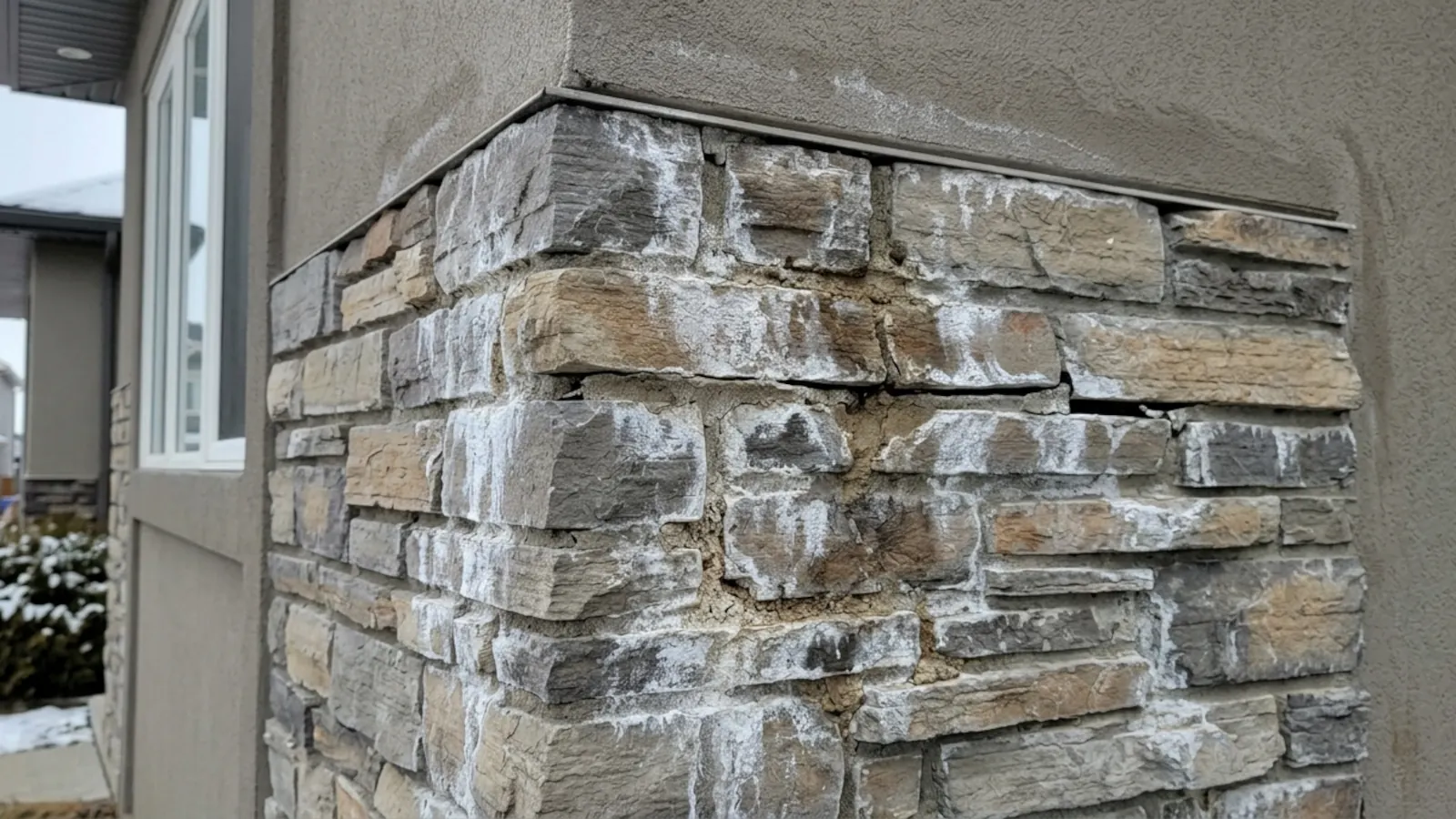
Warning Signs of Moisture Behind Stone Veneer
Water intrusion behind stone veneer typically develops slowly and shows itself through surface changes before structural failure becomes visible. The following indicators are the most common early warning signs:
-
Efflorescence (white mineral deposits):
White or grey crystalline staining indicates moisture moving through the wall assembly and depositing salts on the surface. This confirms active water migration behind the veneer system. -
Persistent dark or damp staining:
Areas that remain dark after drying conditions suggest trapped moisture within the wall cavity rather than surface wetting. -
Hollow-sounding stone:
Indicates loss of adhesion between stone and substrate, often caused by repeated moisture exposure and freeze-thaw stress. -
Crumbling or soft mortar joints:
Mortar degradation occurs when water repeatedly penetrates joints and accelerates freeze-thaw breakdown. -
Bulging or outward movement:
Expansion from ice formation or substrate swelling can push veneer away from the wall plane. -
Cracking along joints or stone faces:
Structural stress from moisture movement and thermal cycling creates progressive cracking patterns.
Why Water Gets Behind Stone Veneer in Edmonton
Freeze–Thaw Cycling
Edmonton’s climate exposes exterior masonry systems to repeated freeze–thaw cycles. Water entering small cracks or joints freezes, expands, and exerts pressure on mortar bonds and the back of the stone.
Over time, this repeated expansion breaks adhesion points and opens new pathways for additional moisture entry.
Moisture Trapped Behind the Veneer
Most failures begin when water cannot properly drain or escape the wall assembly. This is often caused by missing or improperly installed weather barriers, insufficient drainage gaps, or blocked flashing details.
Adhesion Failure
Once moisture reaches the bonding layer, it weakens the mortar bond between stone and substrate. As adhesion degrades, sections of veneer begin to detach, accelerating further water entry.
Flashing and Drainage Deficiencies
Improper or missing flashing at transitions (windows, ledges, and roof intersections) allows water to enter behind the veneer system. Without a drainage path, moisture becomes trapped inside the wall assembly.
Repair vs. Rebuild: How We Assess Damage
The correct repair approach depends on the extent of moisture intrusion and the condition of the substrate behind the veneer:
-
Targeted repair:
Used when damage is isolated and the surrounding veneer system remains structurally sound. -
Partial rebuild:
Required when specific wall sections show substrate damage or widespread adhesion failure. -
Full rebuild:
Necessary when water damage is systemic, affecting the weather barrier or structural wall assembly.
For repair or installation support, visit our culture stone repair Edmonton page.
Stone Veneer Water Damage FAQ
What causes efflorescence?
Moisture moving through the wall dissolves salts in the substrate and deposits them on the surface as it evaporates.
How does freeze-thaw damage stone veneer?
Water trapped in the wall freezes and expands, breaking mortar bonds and separating stone from the substrate over repeated cycles.
Can I clean efflorescence and fix the problem?
Cleaning removes surface staining but does not resolve the underlying moisture source. The entry point must be corrected.
When is rebuild required instead of repair?
Rebuild is required when moisture damage is widespread or when the weather barrier or substrate has failed.
What are the earliest warning signs?
Efflorescence, persistent dampness, hollow sounds, cracking mortar joints, and localized stone movement.
Get Your Stone Veneer Assessed
If you see efflorescence, loose stone, or moisture staining, early diagnosis prevents major rebuild costs. Send photos for assessment in Edmonton and surrounding areas.
Get My Quote