How Alberta's Freeze-Thaw Cycles Are Quietly Destroying Your Exterior Finish
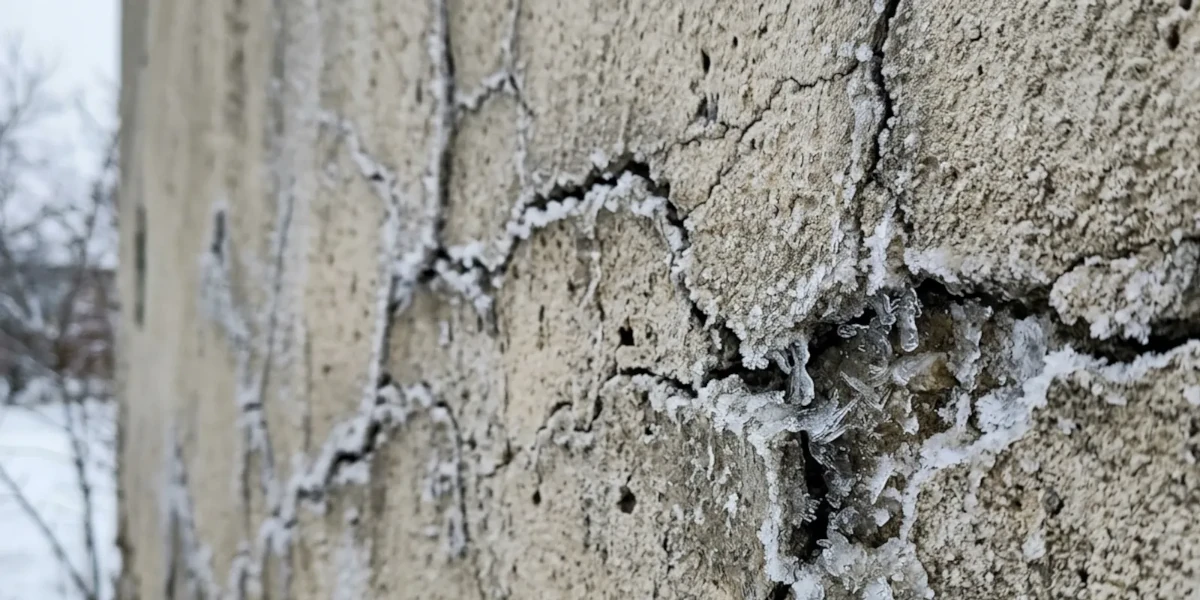
Alberta winters are no secret. What most Edmonton homeowners don't realize, though, is that it's not the deep cold that does the most damage to your exterior finish — it's the thawing. Whether your home has traditional stucco, an EIFS system, or foundation parging, freeze-thaw cycling puts stress on every layer of your exterior — and over time, that stress adds up in ways that are expensive to ignore.
Here's what's actually happening to your home's exterior, why Alberta's climate makes it worse than most, and what you can do about it.
What Is a Freeze-Thaw Cycle?
When water — whether from rain, snowmelt, or condensation — gets inside a small crack or gap in your exterior finish, it sits there. When temperatures drop below zero, that water freezes. Water expands by roughly 9% when it freezes. That expansion exerts pressure on whatever is containing it — in this case, the material surrounding the crack.
When temperatures rise again, the ice melts, the pressure releases, and the water either drains away or sits waiting for the next cold snap. Each time this happens, the crack widens slightly. After ten, twenty, or fifty cycles, what started as a hairline crack becomes a structural concern.
Edmonton's climate is particularly hard on exterior finishes because our temperature swings are dramatic and frequent. According to Environment and Climate Change Canada, Edmonton regularly experiences above-zero stretches in January and February — only to drop back below freezing days later. Unlike cities further north that stay consistently frozen through winter, more thaws mean more cycles, and more cycles mean more damage.
How Freeze-Thaw Damage Shows Up in Stucco
Traditional stucco is a cement-based system, and like all cement products, it is porous. When water infiltrates through small cracks or unsealed gaps and then freezes, the resulting pressure can cause several types of visible damage:
Hairline cracking is the most common early sign. These thin cracks often appear at corners, around window and door frames, or in areas where two different materials meet. On their own, hairline cracks are a cosmetic issue — but they are also entry points for water that will deepen them over time.
Spalling occurs when the surface layer of stucco flakes or chips away. This typically happens when water has penetrated just below the surface and the freeze-thaw cycle repeatedly forces the outer layer up and away from the substrate beneath it.
Bulging or delamination is a more serious sign that water has gotten behind the stucco system itself. When moisture accumulates behind the stucco and freezes, it can push the cladding away from the wall. This is no longer a surface problem — it's a wall assembly problem that requires more significant repair.
Efflorescence — the white, chalky deposits that sometimes appear on stucco surfaces — is caused by water moving through the material and carrying mineral salts to the surface as it evaporates. While not structurally serious on its own, efflorescence is a clear sign that water is moving through your stucco regularly.
EIFS and Freeze-Thaw: A Different Set of Risks
EIFS systems handle freeze-thaw cycles differently than traditional stucco. The foam insulation layer keeps the exterior surface warmer than a cement stucco surface would be, which can reduce the frequency of freeze-thaw events at the wall surface itself.
However, EIFS is not immune. The most common freeze-thaw vulnerability in EIFS systems involves the detailing around penetrations — windows, doors, outlets, and hose bibs. If the sealant at these joints fails and water gets behind the cladding, it can be trapped against the wall sheathing with nowhere to drain.
Modern drainage-plane EIFS systems address this by creating a path for water to escape downward rather than sit against the wall — following guidelines set by the EIFS Council of Canada for moisture control. This is one of the reasons proper EIFS installation — by a contractor experienced with Edmonton's climate — matters so much for long-term performance.
Foundation Parging Takes a Hit Too
Your foundation's parging is often the most overlooked victim of freeze-thaw cycling. Parging sits right at ground level, where it is exposed to the highest moisture load from snowmelt, rain splash, and soil contact. It also experiences more temperature fluctuation than upper wall areas because it absorbs ground heat from below and cold air from above.
Small cracks in parging are extremely common after Edmonton winters. Left unaddressed, those cracks allow water to reach the foundation wall itself — and freeze-thaw damage to concrete block or poured concrete is far more costly to repair than a fresh parging application. If you notice cracking, flaking, or chunks missing from your foundation parging after winter, it is worth getting it assessed before the damage works its way deeper.
The Best Time to Inspect Your Exterior in Edmonton
Spring is the ideal window for exterior inspection in Edmonton — specifically, the period after the last hard freeze but before consistent summer heat. This is when freeze-thaw damage is at its most visible, before sun and drying conditions cause some surface issues to blend back together.
Walk the perimeter of your home and look for:
- Cracks wider than a hairline, especially at corners and around openings
- Areas where stucco sounds hollow when tapped (a sign of delamination)
- Chips, spalling, or missing sections of stucco or parging
- Efflorescence (white chalky deposits) on any surface
- Gaps or separated sealant around windows, doors, or utility penetrations
- Staining or dark patches that suggest moisture is sitting against the wall
Catching damage in spring gives you the full summer and early fall construction season to address it — well ahead of the next freeze cycle.
What Happens If You Wait?
Freeze-thaw damage is progressive. A hairline crack in October becomes a significant crack by April. That significant crack becomes a water infiltration path by the following fall. By the time you have visible interior moisture, mould growth, or damaged insulation, what started as a relatively affordable exterior repair has become a costly wall assembly remediation.
The cost difference between early and late intervention is significant. A localized stucco repair or parging patch caught early is a fraction of the cost of a full system replacement driven by deferred maintenance.
Seeing Signs of Damage After This Winter?
Spring is the best time to catch and fix freeze-thaw damage before it compounds through another cycle. AxisLayer Exteriors offers free exterior assessments across Edmonton — we'll give you an honest picture of what needs attention.
- Stucco repair, parging, and full system replacements
- Built for Alberta's freeze-thaw climate
- Free, no-obligation assessment for Edmonton homeowners
Frequently Asked Questions
How do I know if my stucco damage is from freeze-thaw or just normal aging?
Freeze-thaw damage tends to follow patterns — it concentrates at joints, corners, and areas where water can collect. It also typically appears or worsens noticeably after winter. General aging produces more uniform, gradual surface wear. A contractor can usually identify the cause on inspection.
Can I repair stucco cracks myself?
Small hairline cracks can be addressed with a quality elastomeric sealant as a temporary measure. However, cracks wider than about 3mm, recurring cracks, or any cracking accompanied by bulging or hollow-sounding stucco should be assessed by a professional — the surface crack is often a symptom of a deeper issue.
Is it better to repair or replace freeze-thaw damaged stucco in Edmonton?
It depends on the extent of the damage and the age of the system. Localized damage on a relatively new, otherwise sound system is usually worth repairing. Widespread cracking, repeated delamination, or an aging system with multiple problem areas often makes full stucco replacement the more economical long-term choice.
How often should parging be reapplied in Edmonton?
A quality parging application can last 10 to 20 years or more. However, Edmonton's climate means annual inspection is worthwhile. Small cracks caught early can often be patched; widespread deterioration usually warrants a fresh application.
Does EIFS perform better than stucco in freeze-thaw conditions?
EIFS's insulating layer keeps the wall surface warmer, which can reduce the number of freeze-thaw cycles the cladding experiences. However, both systems require proper installation and detailing to perform well in Alberta's climate — the contractor's workmanship matters as much as the material chosen.
Protect Your Exterior Before the Next Winter
Edmonton's freeze-thaw season is predictable. What isn't predictable is how much damage accumulates before it becomes visible — or how much a late repair will cost compared to an early one.
AxisLayer Exteriors installs stucco, EIFS, and parging across Edmonton and surrounding areas including Sherwood Park and St. Albert — built for Alberta conditions.
Get a free exterior quote today →